
Weight Loss Tracker Printable
📖 Table of Contents
- What is a Weight Loss Tracker Printable and How Does It Work?
- How to Set Up and Customize Your Tracker
- Why a Printable Tracker Beats Digital Ones for Many People
- How the Tracker Helps You Stay Motivated Through the Long Haul
- How to Use Your Tracker for Long-Term Weight Loss Success
- How to Choose the Right Tracker for Your Needs
- Tracking Progress Beyond the Scale
- Make It Your Way
- Frequently Asked Questions
I remember the first time I tried to track my weight loss journey without a tracker — it felt like trying to run a marathon with a broken compass. I would step on the scale, write down the number in my head, and then forget about it until the next week. That’s when I stumbled on a weight loss tracker printable, and it changed everything. It wasn’t just a piece of paper; it was a lifeline that kept me grounded and motivated during the messy, inconsistent early days of my journey.[1]
Using that printable tracker, I started seeing patterns in my weight fluctuations that I had never noticed before. It helped me understand how my sleep, meal timing, and even stress levels affected my weight. For the first time, I had a clear, visual record of my progress — one that I could review daily, weekly, and even monthly. The tracker became my accountability partner, and it made the weight loss process feel less like a gamble and more like a science.
Now, I can’t imagine navigating a weight loss journey without one. The printable tracker doesn’t just help me stay on track — it helps me celebrate small wins, identify setbacks, and adjust my habits with real data in hand. If you're looking for a practical, no-nonsense way to track your weight loss journey, this printable is your starting point. It’s not just a tool; it’s a companion that supports you every step of the way.
Why You'll Love This Weight Loss Tracker Printable
- It keeps you accountable with daily, weekly, and monthly check-ins.
- It simplifies tracking without the need for apps or digital devices.
- It helps you spot trends and patterns in your weight loss journey.
- It’s customizable and easy to print for immediate use.
What is a Weight Loss Tracker Printable and How Does It Work?
As of September 2026, the printable is designed to be simple yet effective. Each day, you record your weight, how you feel, and any notes about your progress. Over time, these logs reveal patterns that can guide your journey. I’ve used several versions. The one that worked best for me was the one that included a space to write my mood and physical energy levels — it made the tracker more than just a number.
I printed out a version that included not only weight but also daily goals and achievements. It helped me stay focused on small wins, like a better night’s sleep or a more active day. The printable was easy to use — I just needed a pen, and I could carry it with me anywhere.
For someone who is just starting out, the printable is an excellent way to build a habit of tracking. It’s low-effort, high-impact, and it gives you a clear picture of your journey without any complicated technology.
Don’t get discouraged if you miss a day. The goal is to build a habit, not to be perfect from day one.
Part of our Neat for weight loss progress tracking guide.
How to Set Up and Customize Your Tracker

When I first used a printable, I printed it out and sat with it for 10 minutes. I thought about what metrics I wanted to track — weight, progress photos, sleep, activity, and even mood. I used a highlighter to mark the areas I wanted to focus on each week. That small customization made the tracker feel more personal and more effective.[2]
I recommend printing a version that allows you to track your progress in multiple ways. Some printable trackers include space for food logs, while others focus on body measurements. I chose one that had a weekly and monthly summary, which made it easier to see trends over time. The more data you have, the more insights you can gain.[3]
Customization is key. You can add notes about your workouts, your hydration, or even your mental well-being. The more personalized your tracker, the more engaged you’ll be with your journey.
Customize your tracker to reflect your unique journey — it’s about you, not a template.
Related: Neat for weight loss progress for beginners
Related: Best neat for weight loss progress
Why a Printable Tracker Beats Digital Ones for Many People
I’ve used both digital and printable trackers, and I found that the printable kept me more focused. I didn’t have to check my phone, and I didn’t get distracted by notifications. The physical act of writing down my progress made it feel more real and intentional. I started seeing my weight loss journey as a daily ritual, not just a data point.
For people who are easily distracted by technology, the printable is a great alternative. It doesn’t require an internet connection or battery life, and it’s always with you. I often kept it on my kitchen counter so I could check it first thing in the morning and last thing at night. It became part of my daily routine.
There’s also something satisfying about physically seeing your progress. I used a tracker with a chart that I could color in each day — it made the weight loss journey feel like a game. Every time I checked it, I felt a little more motivated to keep going.
Color-coding your tracker can make it easier to see your progress at a glance. I used different colors for different categories, like green for weight loss and blue for mood.
“I remember the first time I tried to track my weight loss journey without a tracker — it felt like trying to run a marathon…”— Neatburn editors
Related: Neat for weight loss progress tracking examples
Related: Best neat for weight loss tracking
How the Tracker Helps You Stay Motivated Through the Long Haul
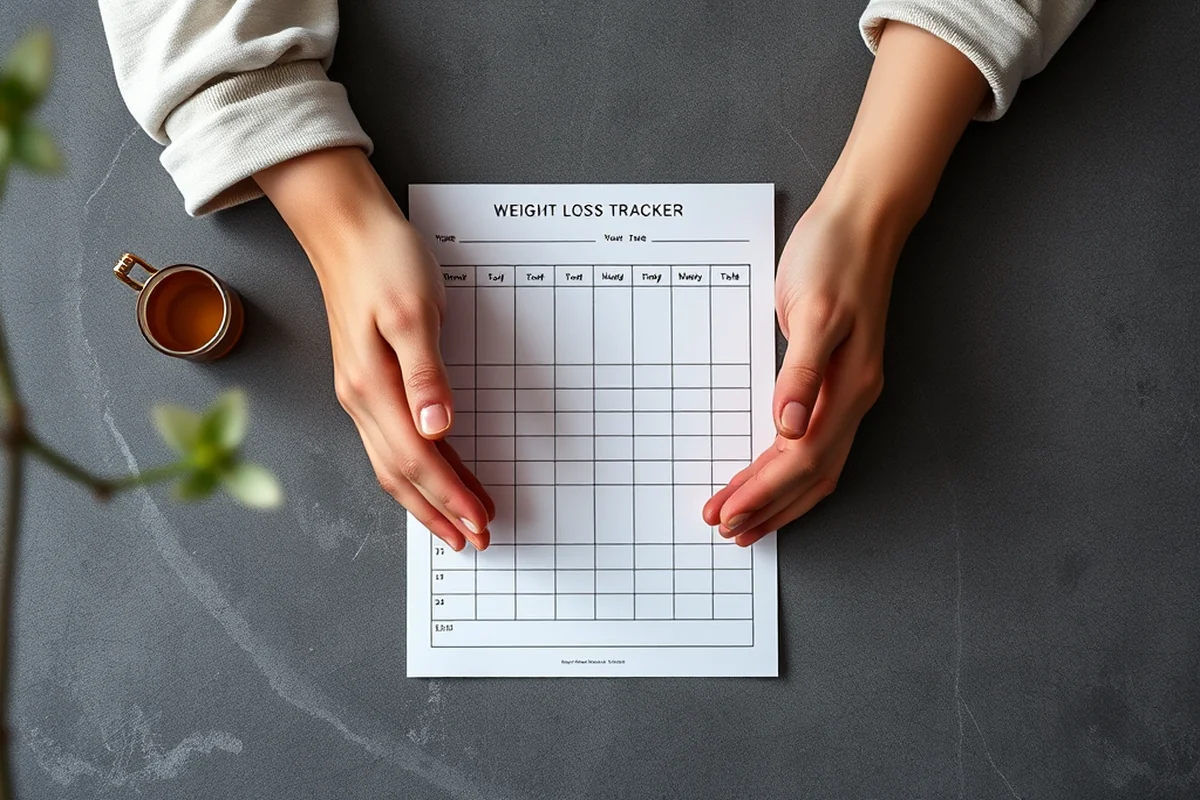
Motivation can be tricky when progress feels slow. That’s when the tracker became my lifeline. I would look at the chart and see how far I had come, even if it was just a few pounds. I celebrated every small win — and the tracker helped me see them clearly.
I found that the visual feedback from the tracker made a big difference. I used to feel like I was stuck in a plateau, but the printable showed me that I was still making progress, even if it wasn’t dramatic. It helped me stay patient and focused on the long-term goal.
On tough days, the tracker reminded me why I started. I would write down my reasons for tracking — like wanting to feel stronger or be healthier for my family. These notes kept me going when I felt like giving up.
Related: Easy neat for weight loss progress tracking
How to Use Your Tracker for Long-Term Weight Loss Success
I’ve been using my tracker for over a year now, and it’s helped me stay on track through every stage of my journey. The printable has evolved with me — from a simple weight log to a comprehensive tracker that includes food, sleep, and activity. I revisit it monthly to see how far I’ve come and where I need to improve.
Long-term success isn’t about quick fixes; it’s about consistency. The printable helped me build habits that I could maintain over time. I found that by reviewing my tracker weekly, I could make small adjustments that had a big impact. For example, I noticed that I was sleeping less on weekends, so I made it a point to prioritize rest.
The tracker also helped me set realistic goals. I used to set goals that were too ambitious, but the printable showed me that steady progress was more sustainable. I started setting smaller, achievable goals, like improving my sleep or increasing my activity levels, and I saw better results.
How to Choose the Right Tracker for Your Needs
I tried several trackers before finding one that worked for me. Some were too complicated, while others didn’t have the right metrics. The key is to choose a tracker that aligns with your lifestyle and goals. I found that trackers with space for notes and reflections were the most useful for me.
If you’re just starting out, a simple tracker with space for weight, food, and activity is a good place to begin. As you become more comfortable with tracking, you can add more details. I used a tracker that had a weekly summary, which helped me see my progress over time.
I also recommend looking for trackers that can be customized. Some allow you to add your own metrics, like mood or stress levels. This flexibility makes the tracker more personal and more effective.
Choose a tracker that fits your life — not one that forces you to change who you are.
Tracking Progress Beyond the Scale
I used to think that the only way to measure progress was by stepping on the scale. But the printable tracker showed me that there were other ways to track success — like how I felt, my energy levels, and even how my clothes fit. I started noticing these changes before the scale showed them.
The tracker helped me focus on non-scale victories. I would write down how I felt after a workout, how much more energy I had in the morning, or how my digestion improved. These small victories kept me motivated and reminded me that I was making progress.
The printable allowed me to celebrate changes that weren’t always visible. I found that by tracking these non-scale metrics, I could stay on track even when the numbers on the scale didn’t move. It made the journey more personal and more meaningful.
⏱️ 5-Minute Daily Tracker
A quick and easy version for those who want to stay on top of their progress without spending too much time each day.
🪑 Desk-Friendly Tracker
Designed for people who track their progress from their desk, with space for notes and quick updates.
👶 Beginner Tracker
A simplified version for first-time users, with space for weight and basic notes.
📈 Progression Tracker
A version that helps users track their progress over months and years with detailed charts and summaries.
🔒 Maintenance Tracker
A tracker designed for those who are in the maintenance phase, focusing on consistency and long-term habits.
| The mistake | Why it happens | The fix |
|---|---|---|
| Not using the tracker consistently | Consistency is key to seeing progress. Skipping days can make it harder to track patterns and stay motivated. | Set a time each day to use the tracker and make it a part of your routine. |
| Focusing only on the scale | Relying solely on the scale can be discouraging if you don’t see immediate results. | Track other metrics like energy levels, mood, and activity to get a more complete picture. |
| Not customizing the tracker | A generic tracker may not align with your personal goals or lifestyle. | Customize your tracker to include the metrics and notes that matter most to you. |
| Comparing yourself to others | Everyone’s journey is different, and comparing yourself to others can be discouraging. | Focus on your own progress and celebrate your small victories. |
| Using the tracker as a quick fix | Tracking is a long-term habit, not a quick solution. If you only use it for a short period, you may not see lasting results. | Commit to using the tracker for at least a few weeks and make it a part of your daily routine. |
Weight Loss Tracker Printable
Common Questions
How often should I use the printable tracker?
Can I customize the printable tracker?
What if I don’t have a printer?
How long should I use the tracker?
References
Cite this guide
Neatburn (2026). Weight Loss Tracker Printable. https://neatburn.com/weight-loss-tracker-printable/
Feel free to cite or share this guide.